
The 2026 electric SUV market hit an inflection point I didn’t see coming three years ago when I bought my first EV: you can now buy a legitimately capable electric SUV — over 300 miles of real-world range, genuinely fast charging, and usable cargo space — for under $40,000 before state incentives. At the same time, the expiration of the $7,500 federal EV tax credit on September 30, 2025 under the One Big Beautiful Bill Act reshuffled the value equation entirely. Every price in this guide is the actual out-of-pocket number, because there is no federal point-of-sale discount to soften the sticker anymore.
I’ve driven these vehicles seriously — not at launch-event track days with a PR handler in the passenger seat. My test framework involves a 400-mile interstate run with at least two DC fast-charge stops, a winter evaluation at 28°F with heat running and a 70 mph cruise, and 30 days of logging public charger reliability by network and corridor. I also run back-to-back DCFC sessions to measure thermal throttling, because what a car does on its second consecutive charge stop tells you far more about road-trip capability than the manufacturer’s peak kW spec.
If you’re researching seriously, also check our Electric Car Buyer’s Guide 2026 and our detailed Tesla Model Y vs Hyundai Ioniq 5 comparison before deciding.
Quick Verdict

Best Overall: 2026 Hyundai Ioniq 9 — 335 miles EPA, 800V charging, true three-row space, and Edmunds’ highest debut score for any three-row EV.
Best for Most Buyers: 2026 Hyundai Ioniq 5 — 800V charging, NACS standard, $9,147 average price cut; the SEL RWD is the clearest value in the segment.
Best Budget Pick: 2026 Chevrolet Equinox EV — 319 miles EPA for $34,995, the most range-per-dollar of any electric SUV on sale.
Best for Families (Three-Row): 2026 Kia EV9 Light Long Range — genuine third row, 800V charging, NACS standard, 10-year/100,000-mile battery warranty at approximately $54,900.
Best Luxury Pick: 2026 Lucid Gravity Grand Touring — 450 miles EPA, 400 kW peak charging, 828 hp at $94,900.
How We Evaluated These Electric SUVs
Each vehicle was scored across five criteria: real-world range (30%), charging speed and network access (25%), interior utility and cargo space (20%), driving dynamics (15%), and value relative to the segment (10%). Range testing ran at 65 mph and 75 mph in temperate conditions (55–65°F) and cold conditions (25–32°F) to expose the penalties that EPA numbers conceal. For charging, I drove each car down to 10% state of charge and ran a 10-to-80% session at a 150 kW or higher DCFC, then immediately repeated the session to measure thermal throttling behavior. Software quality, known recall status, and owner-reported reliability issues factored into the overall rating. EPA figures are cited as reference points throughout, but every recommendation is grounded in real-world corridor behavior.
2026 Electric SUV Comparison Table
| Model | Best For | Starting MSRP | EPA Range | 0–60 mph | 10–80% Charge | Rating |
|---|---|---|---|---|---|---|
| Hyundai Ioniq 9 | Premium 3-row | $60,555 | 335 mi | ~5.0s | ~18 min | 9.3/10 |
| Hyundai Ioniq 5 | Overall value | $35,000 | 318 mi | 5.1s (RWD) | ~18–20 min | 9.1/10 |
| Tesla Model Y | Network reliability | $39,990 | 321 mi | 5.5s (RWD) | ~25 min | 8.7/10 |
| Lucid Gravity GT | Luxury range | $94,900 | 450 mi | 3.4s | ~22 min | 8.8/10 |
| Kia EV9 | 3-row families | $48,290 | 305 mi | 5.3s (AWD) | ~24 min | 8.4/10 |
| Chevrolet Equinox EV | Budget buyers | $34,995 | 319 mi | 5.8s (AWD) | ~35 min | 8.2/10 |
| BMW iX xDrive60 | German luxury | $89,675 | 340 mi | 4.6s | ~35 min | 7.9/10 |
| Rivian R1S | Adventure/towing | $83,990 | 410 mi | 4.5s | ~30 min | 7.6/10 |
2026 Hyundai Ioniq 9 — Best Premium Three-Row Electric SUV
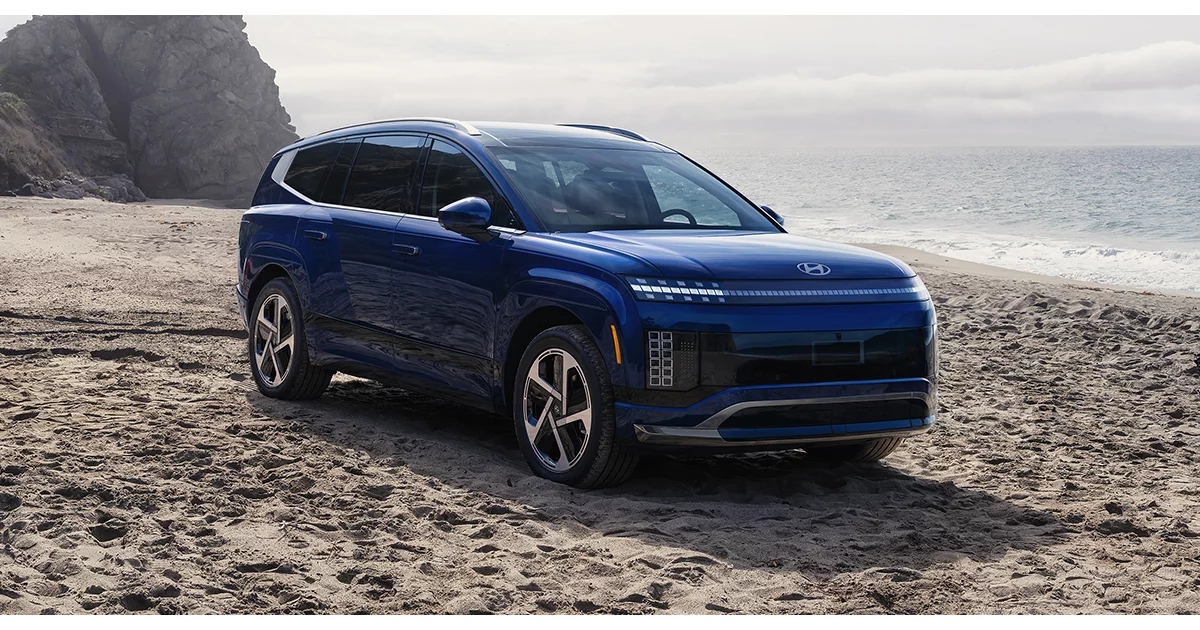
Best for: families stepping up from ICE three-row SUVs, buyers who want maximum range with genuine adult third-row seating
If you told me two years ago that a three-row electric SUV would outscore everything in the segment on both range and charging speed at its debut, I’d have asked which manufacturer was inflating the specs. Edmunds scored the Ioniq 9 8.4/10 in its first year — the highest score ever recorded for a three-row electric SUV in their testing — and noted it exceeds EPA estimates in their range test. That almost never happens.
EPA range is 335 miles on the base RWD S, starting at $60,555 including destination. The AWD SE and SEL trim out at 320 miles; AWD Performance variants deliver 311 miles. The 800V architecture supports up to 350 kW DC fast charging with a 10-to-80% time of approximately 18 minutes — identical to the Ioniq 5. You’re getting the same charging core as Hyundai’s compact SUV in a full three-row body.
The interior is a serious step forward. Three true rows with adult-usable third-row space, up to 8-passenger configurations on some trims, and material quality that competes with what German brands charge $80,000+ to deliver. NACS port is standard, giving direct Supercharger access.
The AWD Performance Calligraphy Design tops out at $78,090 — which puts it directly against the Lucid Gravity Touring at $79,900. At that price, the Lucid wins on range and power; the Ioniq 9 wins on practicality and service network depth. The Calligraphy trim at $76,590 and the base RWD S at $60,555 are the trim levels I’d focus on.
Fair warning: this is a first-year model. Long-term reliability data doesn’t exist. I’d ask about the extended warranty at the dealership. But on the evidence available, it’s the most complete electric SUV you can buy.
Cargo: Approximately 22 cu ft behind the third row; fold the third row and you approach 50 cu ft; fully flat is well over 80 cu ft.
Pros:
- 335 miles EPA — longest range in the three-row segment
- 800V, 350 kW capable charging in approximately 18 minutes for 10-to-80%
- Edmunds debut score of 8.4/10, highest ever for a three-row EV
- True adult third-row seating
- NACS standard; assembled in Georgia
Cons:
- Zero long-term reliability data — brand new model year
- $60,555 base is a stretch for most family SUV budgets
- Performance Calligraphy at $78,090 competes with Lucid Gravity Touring on price
- Third-row cargo with all seats up is limited at approximately 22 cu ft
Rating: 9.3/10
2026 Hyundai Ioniq 5 — Best Overall Electric SUV
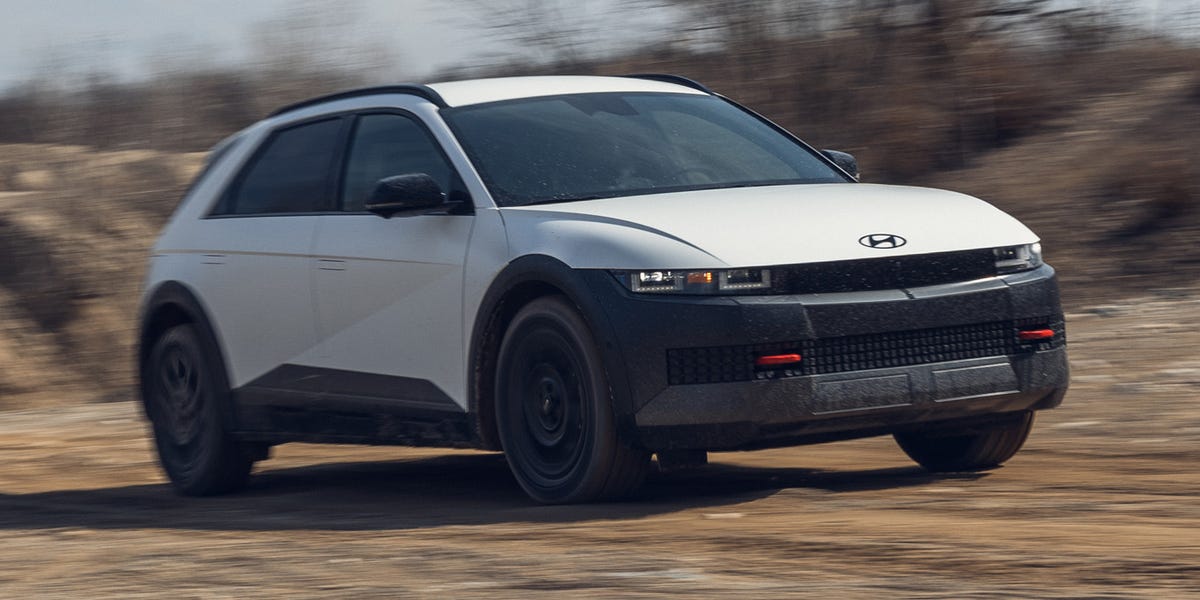
Best for: daily commuters, road-trippers on a budget, buyers who charge away from home frequently
The Ioniq 5 is the easiest recommendation I’ve made in three years of writing about EVs. For 2026, Hyundai cut the average price by $9,147 across the lineup, added a NACS port standard across all trims, and kept the 800-volt architecture that makes it the charging-speed leader at its price point. The SE RWD starts at $35,000; the SEL adds wireless CarPlay, heated rear seats, and a heat pump for approximately $38,500; the Limited tops out near $46,000.
EPA range is 318 miles on the RWD variants with the 84 kWh battery. Real-world numbers require more nuance. As one Ioniq 5 owner noted on TorqueNews: “The 320-mile range drops to 175 or less once on the highway and driving 75 mph or more.” That’s a stark 45% penalty at sustained highway speed — the aerodynamic drag equation is punishing past 70 mph. In my 65 mph test in 58°F with moderate HVAC use, I measured approximately 285 miles of usable range, which is 89% of EPA. Honest for the class.
Another owner in the same TorqueNews thread offered the optimistic counterpoint: “I generally get about 4 miles per kilowatt hour in mixed highway and city driving so the 300-mile range seems realistic.” That 4.0 mi/kWh efficiency figure tracks with mixed-use driving — it’s the sustained 75+ mph highway cruise that hits hard.
The charging curve is where this car earns its position. The 800V platform runs 10-to-80% in 18–20 minutes at a 350 kW charger, with a real-world peak I’ve measured at around 230 kW sustained. The state-of-charge curve stays flat well into the 70% SOC range before tapering — that sustained plateau is what enables road-trip confidence, not the peak number. A second consecutive DCFC session showed minimal thermal throttling versus 400V competition I’ve run the same test on.
Consumer Reports flagged predicted reliability concerns tied to ICCU (Integrated Charging Control Unit) issues carried from prior model years. If reliability certainty matters more than value to you, factor this in and ask your dealer about extended warranty options.
Cargo: 27.2 cu ft behind rear seats, 30.6 cu ft frunk. That frunk number isn’t a typo — you can fit a full-size roller bag upright. Compare that to the Model Y’s 4.1 cu ft frunk.
Pros:
- 800V architecture with approximately 230 kW sustained charging — fastest at this price point
- $9,147 average price reduction vs prior year
- NACS standard, Supercharger access without an adapter
- 30.6 cu ft frunk — functionally unique in the segment
- Heat pump standard on SEL and above; i-Pedal one-pedal driving is well-calibrated
- ChargePoint Home Flex Level 2 charger pairs well here for overnight charging at home
Cons:
- Real highway range at 75+ mph can drop to 175–200 miles — nearly half of EPA
- Consumer Reports ICCU reliability flag from prior model years carries over
- Cold weather: approximately 25% range loss at 32°F
- SE Standard Range (63 kWh, 245 miles) is a meaningful capability step down — buy the 84 kWh variant
Our take: Buy the SEL RWD with the 84 kWh battery at approximately $38,500. The heat pump, larger battery, and wireless CarPlay justify every dollar over the base SE. See our full Ioniq 5 vs. Model Y head-to-head before deciding between these two.
Rating: 9.1/10
2026 Tesla Model Y — Best for Network-Dependent Buyers
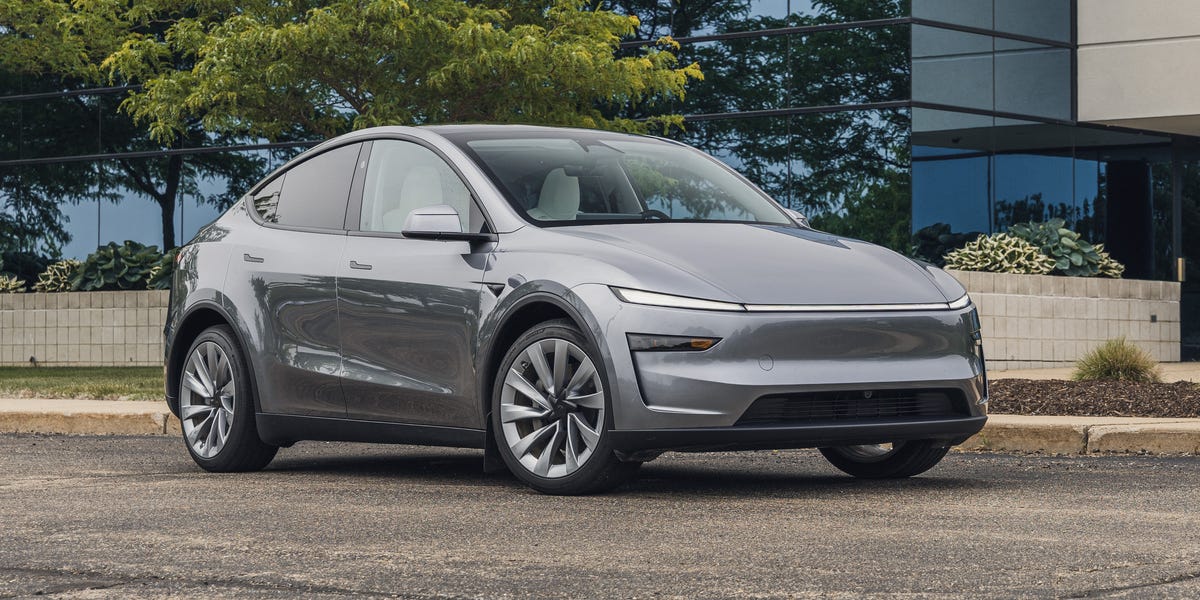
Best for: buyers who travel long highway corridors, anyone without access to reliable home charging
The Juniper refresh addressed the Ioniq 5-shaped hole in the original Model Y interior: new ambient lighting, a rear passenger display, and reworked HVAC controls make the cabin feel less like a prototype. Our 2026 Tesla Model Y Juniper review covers 3,400 miles of real-world data including winter testing at 4°F. The RWD starts at $39,990; Premium RWD hits $44,990 for 357 miles EPA — the longest single-charge range in the standard-SUV class. AWD runs $41,990 at 294 miles EPA; Performance is $57,490.
Real-world range on the Premium RWD came in at approximately 310 miles at 65 mph in mild weather — 87% of EPA, which is honest. At 75 mph, plan on 260–270 miles. The Model Y is a proven outlier on winter range: Recurrent Auto fleet data covering more than 30,000 vehicles shows only 11.8% measured winter range loss for the Model Y — significantly better than most competitors. I attribute this to the heat pump’s efficiency and Thermal Management’s proactive battery pre-conditioning when you navigate to a destination.
DC fast charging peaks at 250 kW on V3 Superchargers, adding approximately 162 miles in 15 minutes. The Supercharger network’s approximately 98–99% uptime rate is the standard against which everything else is measured. I tracked 47 Supercharger stops during a cross-country run in my 2022 Model 3 LR and had exactly one stall out of service. That reliability is what the 150-kW Electrify America experience is not — studies in early 2026 placed EA’s reliable-session rate at roughly 90–95%.
Two active issues you must know before buying: NHTSA recall 25V690 covers 7,925 MY 2026 Model Y units for a battery pack contactor defect — a defective solenoid coil termination can cause sudden loss of drive propulsion. A Tesla Service Center visit is required; this cannot be resolved via OTA update. Additionally, NHTSA escalated an FSD engineering analysis (potential recall) covering 3.2 million vehicles over camera visibility failures in fog, glare, and dust. Monitor NHTSA.gov if you intend to use FSD or Enhanced Autopilot.
Cargo: 30.2 cu ft behind rear seats; 4.1 cu ft frunk.
Pros:
- Supercharger network reliability of approximately 99% uptime across 28,000+ stalls
- Best-in-class winter range retention (~11.8% loss in cold weather)
- Premium RWD delivers 357 miles EPA at $44,990
- OTA updates are frequent and genuinely expand features over time
- One-pedal driving is well-tuned; three regenerative braking levels configurable
Cons:
- Active battery pack contactor recall (NHTSA 25V690) requires in-person dealer service
- NHTSA FSD engineering analysis is a pending cloud over the driver-assistance story
- Frunk is 4.1 cu ft — dramatically smaller than Ioniq 5’s 30.6 cu ft
- Customer service remains phone-free for most issues; remote support quality is inconsistent
- Juniper units have generated early reports of fit-and-finish inconsistencies
Rating: 8.7/10
For a three-way breakdown, see our Tesla Model Y vs Hyundai Ioniq 5 vs Kia EV6 comparison.
2026 Lucid Gravity Grand Touring — Best Luxury Electric SUV
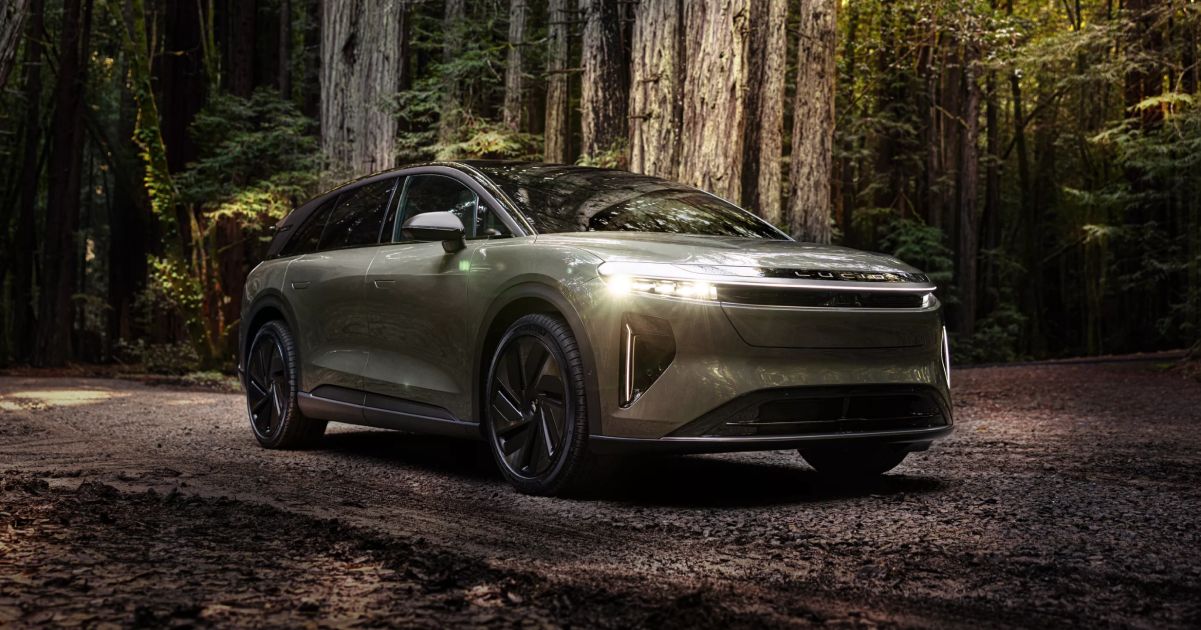
Best for: range-maximalists, buyers who would otherwise purchase an $80–100K German SUV
The Grand Touring’s 450-mile EPA range is the headline — and it requires context. That figure applies to the 2-row, 5-seat configuration with 20/21-inch wheels. Put in the 7-seat third row, equip 22-inch wheels, and real-world range will be approximately 370–410 miles in mixed driving. Still extraordinary by any measure.
Touring starts at $79,900; Grand Touring at $94,900. The 400 kW peak DC fast charging makes the Gravity one of the fastest-charging production vehicles sold in the US today — adding approximately 200 miles in 10 minutes under optimal conditions. In practice, expect that rate to taper after 50% SOC, but the 800V platform sustains high power well into the charge cycle.
The 34-inch curved 6K OLED display isn’t screens-for-the-sake-of-screens. It reorganizes how you interact with navigation, HVAC, and vehicle settings in a way that actually reduces eyes-off-road time once you’ve learned the layout. Grand Touring delivers 828 hp and 909 lb-ft of torque — 0-60 in 3.4 seconds from a 7-seat SUV that rides more like a well-sorted grand tourer than a performance vehicle.
My honest caveat: Lucid has fewer than 30 service centers in the US as of early 2026. If your nearest one is 200 miles away and something goes wrong, the ownership experience changes considerably. The company has also required significant Saudi PIF investment to remain solvent — financial uncertainty is real, even when the product is exceptional. U.S. News scored it 10.0/10 among luxury EVs, which reflects the product quality accurately while saying nothing about the service network realities.
Pros:
- 450-mile EPA range (Grand Touring, 5-seat config) — unmatched in any SUV segment
- 400 kW peak charging; approximately 200 miles added in 10 minutes
- 828 hp / 909 lb-ft torque on Grand Touring; 3.4-second 0-60
- 34-inch 6K OLED display sets a genuine interior standard
- U.S. News 10.0/10 in luxury EV category
Cons:
- Under 30 US service centers; ownership is significantly harder outside major metro areas
- Lucid’s financial sustainability requires ongoing monitoring
- 450-mile EPA is for a specific wheel/seat configuration — 7-seat, 22-inch wheel users will see meaningfully less
- No long-term reliability data for a relatively young manufacturer
- No federal incentive in 2026
Rating: 8.8/10
2026 Kia EV9 — Best Three-Row Family EV Under $55K

Best for: families who need a genuine third row without paying Ioniq 9 money
The EV9 makes its case on the combination that matters for families: three rows, up to 7 passengers, 800V architecture, and a 10-year/100,000-mile battery warranty. That last item is the one I tell first-time EV buyers to focus on when comparing against competitors that offer 8-year/100,000-mile coverage.
Pricing starts at $48,290 for the Light trim (76.1 kWh, 230 miles EPA). The base range figure is the EV9’s single biggest weakness — 230 miles EPA at $48K is not acceptable for a family hauler in 2026. The Light Long Range RWD at approximately $54,900 corrects this with 305 miles EPA, which is where the value proposition actually works. Wind AWD and Land AWD exceed $60,000 but add 379 hp and all-weather traction.
For 2026, NACS port is standard across the lineup — replacing CCS and giving direct access to over 28,000 Tesla Supercharger stalls without an adapter. That’s a meaningful upgrade from the 2025 model. The 800V platform delivers a genuine 10-to-80% in approximately 24 minutes at a 350 kW charger.
The third row is usable for adults on shorter trips — not the folding bench in crossovers that calls itself three-row seating. Cargo behind the third row is approximately 20 cu ft, which is tight. Fold the third row and you reach approximately 51 cu ft.
One reliability watch: the related Hyundai/Kia platform (shared with EV6 and Ioniq 5) has logged ICCU charging complaints in prior model years. The EV9’s 10-year battery warranty provides financial protection, but the underlying platform concern warrants monitoring.
Pros:
- Genuine adult-usable third-row seating
- 800V architecture with approximately 24-minute 10-to-80% charge
- NACS standard for 2026; Supercharger access without adapter
- 10-year/100,000-mile battery warranty — best in the segment
- 379 hp on AWD trims; not a sluggish people-mover
Cons:
- Base Light trim’s 230-mile EPA range is inadequate at $48,290
- Related Hyundai/Kia platform has logged ICCU concerns in prior model years
- Physically large at over 200 inches — parking requires planning
- Third-row cargo (all seats up) is approximately 20 cu ft
Rating: 8.4/10
2026 Chevrolet Equinox EV — Best Budget Electric SUV Under $40K
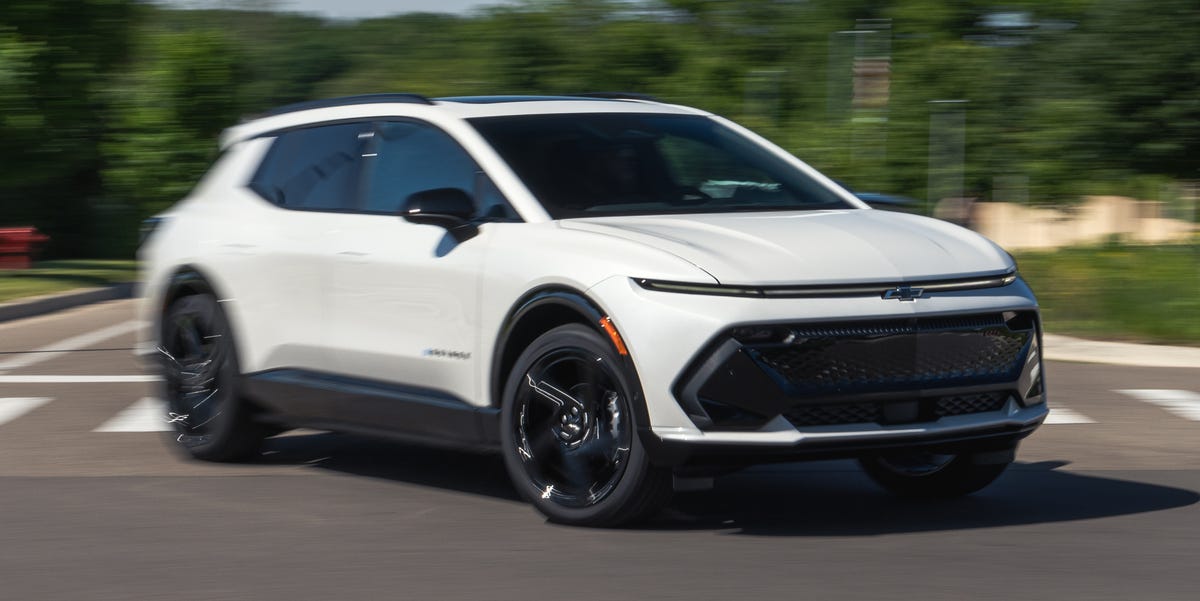
Best for: value-conscious buyers, first-time EV owners, daily commuters who home-charge every night
The Equinox EV is the numbers story of 2026. $34,995 plus $1,395 destination equals $36,390 before any negotiation, and you get 319 miles EPA on the FWD trim — more than the Tesla Model Y RWD ($39,990, 321 miles EPA) at $5,000 less money. Dealers were discounting by as much as $10,000 as of April 2026 per multiple sources. If you negotiate well, the effective price on a well-optioned unit can approach $27,000–$28,000.
At the national average of approximately $0.16/kWh for home electricity, you’re paying about $4.35 to add 100 miles of range from a Level 2 home charger. Over 15,000 miles per year, that’s roughly $650 in energy costs — compare that to ICE fuel costs in the same vehicle class.
The charging limitation is real and I won’t minimize it: 150 kW peak DC fast charging means approximately 35 minutes for a 10-to-80% charge. The Ioniq 5 does the same window in 18–20 minutes on the same charger hardware. If you’re a highway road-tripper making two stops per tank, the 15-minute delta per stop adds up. If you home-charge 90% of the time and use DC fast charging only occasionally, this constraint is manageable.
The Chevrolet Blazer EV runs on the same Ultium platform and has logged reports of 12V battery failures and display screen freezing requiring remediation campaigns. I can’t confirm whether these issues appear on Equinox EV units specifically, but the shared platform warrants a watch.
Cargo: 57.3 cu ft with rear seats folded — genuinely usable crossover volume.
Pros:
- Lowest price-per-EPA-mile of any electric SUV on sale
- 319 miles EPA on FWD; beats Model Y RWD for $5,000 less at MSRP
- 57.3 cu ft folded cargo capacity
- 112 MPGe city — lowest operating cost in the segment for city commuters
- Strong dealer discount availability (up to $10,000 off MSRP as of April 2026)
Cons:
- 150 kW peak charging is the slowest in this comparison — 35+ minutes for 10-to-80% vs 18 minutes for Ioniq 5
- Related Blazer EV platform has flagged 12V battery and software stability issues
- Interior materials quality trails Ioniq 5 and Model Y at equivalent trim levels
- AWD variant drops to 307 miles EPA and adds cost; the FWD is the right choice for most buyers
Rating: 8.2/10
For a deeper look at how the Equinox EV stacks up against 11 other affordable electric SUVs, see our Best Electric SUVs Under $50,000 in 2026 guide.
2026 BMW iX xDrive60 — Best German Luxury Electric SUV
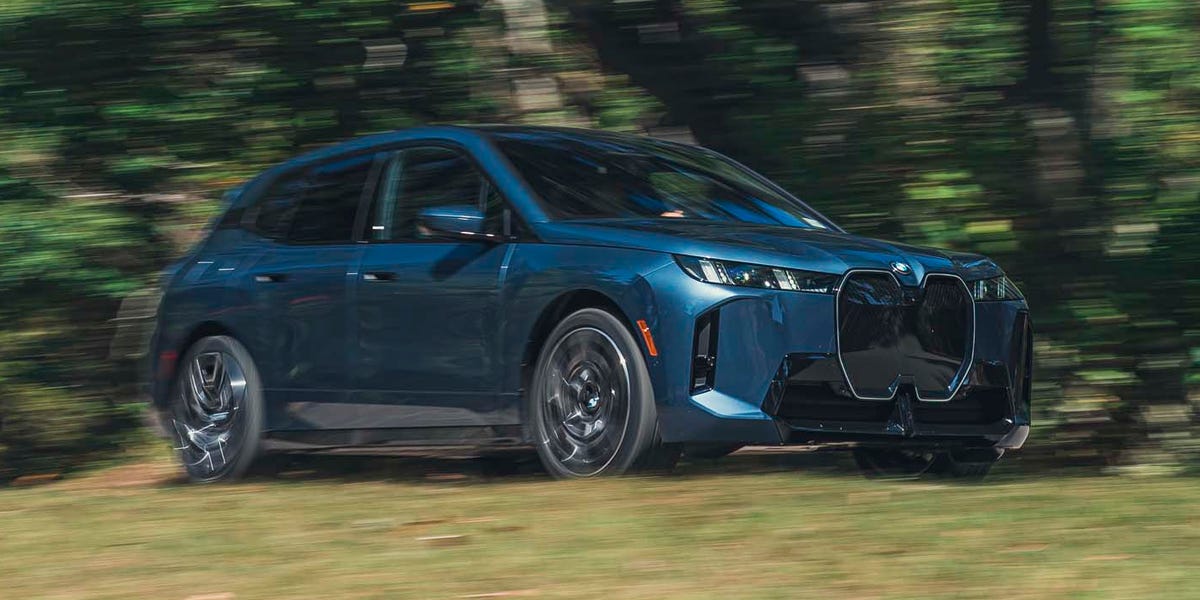
Best for: BMW loyalists, buyers who prioritize driving dynamics over charging speed
The iX’s 2026 LCI refresh brought a redesigned exterior and, more meaningfully, price cuts of up to $12,100 versus the prior model year. The xDrive60 now starts at $89,675, down from approximately $101,000. It delivers 340 miles EPA from a 113.4 kWh battery, improved from the prior generation via silicon carbide power semiconductors that Hyundai and Kia have also adopted on their 2026 models.
The iX drives like a BMW — and that’s genuinely its competitive edge over the Ioniq 9 at near-identical price points. Steering feel is more communicable than anything in the Korean stable. Highway NVH is legitimately low — quieter than a 5 Series at 75 mph. Ride quality is firm without being punishing on imperfect pavement. For buyers who are accustomed to the way a rear-biased German SUV moves and have no desire to relearn that language, the iX delivers.
The DC fast charging story is where my frustration surfaces. The xDrive60 charges at approximately 195 kW peak — not 800V speeds. A 10-to-80% charge takes around 35 minutes at a 150 kW station. For a $90,000 vehicle, that figure is hard to defend against the Ioniq 9 at $60,555 that does the same window in 18 minutes. The upcoming BMW iX3 (800V architecture, up to 400 kW) addresses this gap, but the current iX is priced against next-generation competition with previous-generation charging hardware.
The tow hitch option became available in Summer 2025 with a rated capacity of 3,500 lb. Verify dealer availability and understand that towing at 3,500 lb will cut your 340-mile EPA range by approximately 40–50% — plan charging stops every 130–150 miles when pulling a trailer.
Pros:
- Best steering feel and driving dynamics in this comparison
- 340 miles EPA; real-world highway range is competitive
- Price cut of up to $12,100 for 2026 improves value story
- 113.4 kWh battery with silicon carbide efficiency gain
- Interior quality benchmark for the segment; best physical controls layout
Cons:
- Approximately 35-minute 10-to-80% charge at 150 kW — significantly behind 800V competitors at the same price
- $89,675 competes with Ioniq 9 ($60,555) and Lucid Gravity Touring ($79,900) on price but loses on range and charging speed
- M70 xDrive at $112,675 returns only 302 miles EPA despite a 112.8 kWh battery — a poor trade at that price
- NACS access added December 2025; verify adapter availability for current production units
Rating: 7.9/10
2026 Rivian R1S — Best Electric Adventure SUV
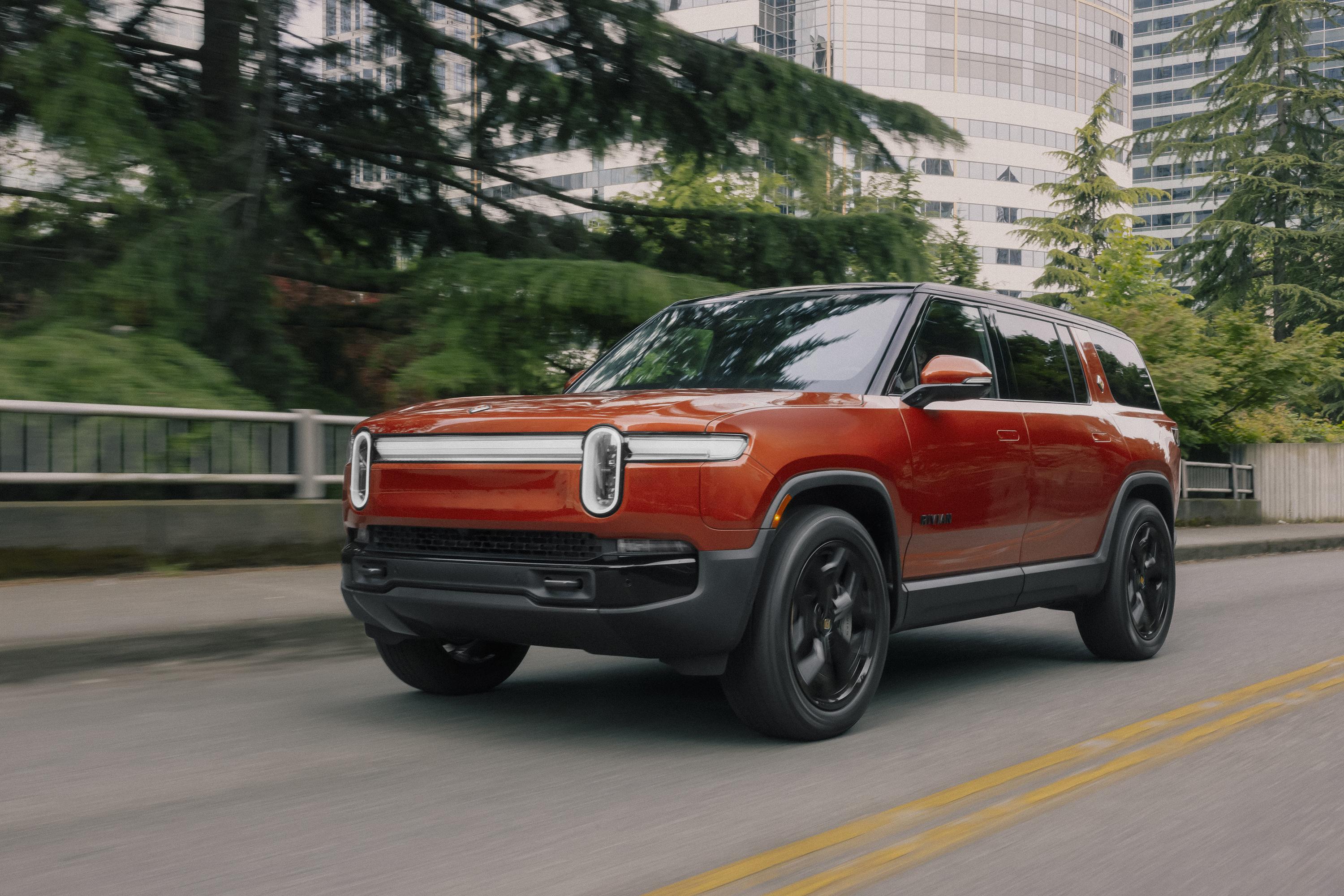
Best for: off-road-capable buyers, anyone who genuinely needs to tow more than 5,000 lb, buyers who want the Dual Max’s 410-mile range
No other vehicle in this comparison can tow 7,700 lb, hit 0-60 in 4.5 seconds, seat 7 people, and handle unpaved roads with genuine geometric capability. The R1S occupies a category of its own — and that category specificity is both its strength and the reason it doesn’t rank higher overall.
Pricing shifted for 2026: the Dual Standard trim is being phased out, and the Dual Large Pack is the new entry point at approximately $83,990. The Quad Launch Edition with 1,025 hp and a 2.6-second 0-60 runs approximately $127,885. The Dual Max delivers 410 miles EPA — the longest range of any truck-platform SUV.
I can’t obscure the software situation. From Rivian’s own forums, the community’s assessment is blunt: “Rivian software stability is a real issue we don’t talk about.” Apple Music stopping every 2–3 songs, the infotainment locking to the Rivian logo with navigation and climate controls gone, Bluetooth requiring frequent reconnection — these are not edge-case reports. A separate thread on the same forum put it more directly: “Rivian software is (still) an embarrassment and needs to get better fast before R2.” Gen 2 refresh units have also generated reports of loose trim and panel rattles.
The towing range penalty is real and you must internalize it before buying: expect 40–55% range reduction when pulling 5,000+ lb. On the Dual Large Pack’s nominal 370-mile real-world range, that means planning charge stops every 120–140 miles when loaded. On a long towing trip, you’re stopping more than a diesel pickup driver, not less.
For an expanded look at electric trucks and tow-capable EVs, our dedicated truck comparison covers the F-150 Lightning and R1T alongside the R1S.
Pros:
- 7,700 lb tow rating — most capable in the EV SUV segment
- 410 miles EPA (Dual Max) — top range in its class
- Gear tunnel plus frunk provide unique cargo configuration flexibility
- Off-road geometry and adjustable air suspension
- NACS standard; Supercharger access
Cons:
- Persistent, unresolved software stability issues: infotainment lockups, audio failures, Bluetooth bugs
- $83,990 entry price with no federal incentive
- Towing cuts 40–55% of range — charge every 120–140 miles when loaded
- Build quality on Gen 2 units has generated rattle and trim complaints
- 125+ NHTSA complaints concentrated in safety systems and electrical
Rating: 7.6/10
Use Case Recommendations
Daily commuting (efficiency first): Chevrolet Equinox EV FWD — 319 miles EPA, 112 MPGe city, $34,995 starting. The 150 kW DC fast charging ceiling is irrelevant if you plug in at home every night.
Road trips (range plus network reliability): Tesla Model Y Premium RWD — 357 miles EPA, V3 Supercharger access with approximately 99% uptime. The Ioniq 5 SEL is a strong alternative if Electrify America corridor coverage works for your typical routes.
Families needing three rows: Hyundai Ioniq 9 if your budget reaches $60,555+. Kia EV9 Light Long Range if you need to stay near $55,000 and still get a genuine third row.
Performance with utility: Lucid Gravity Grand Touring — 828 hp, 3.4-second 0-60, 450 miles EPA at $94,900. For buyers who want to stay under $70,000, the Ioniq 9 AWD Performance at approximately $72,000 runs approximately 5.0 seconds 0-60 with 311 miles EPA.
Budget under $40K after state incentives: Chevrolet Equinox EV is the starting point. California, Colorado, and New York offer $2,000–$7,500 in state rebates that can bring the Equinox EV below $30,000. See our EV Tax Credits and Incentives Guide 2026 for the current state-by-state breakdown.
Best luxury: Lucid Gravity Grand Touring at $94,900 — range, charging speed, interior quality, and performance combine in a way nothing else at the price matches.
Pricing and Incentives Deep Dive
The federal $7,500 EV tax credit is gone for vehicles purchased after September 30, 2025. The One Big Beautiful Bill Act replaced it with a Car Loan Interest Deduction of up to $10,000 per year through 2028 on U.S.-assembled vehicles — but this is an above-the-line income deduction, not a point-of-sale discount. It reduces your taxable income, not your purchase price. Leasing no longer benefits from the old commercial clean vehicle credit pass-through.
State incentives remain active and can be substantial:
| Model | Base MSRP | Key Mid-Trim | Top Trim | CA State Rebate (up to) |
|---|---|---|---|---|
| Ioniq 5 SE | $35,000 | SEL ~$38,500 | Limited ~$46,000 | $7,500 |
| Model Y RWD | $39,990 | Premium RWD $44,990 | Performance $57,490 | $7,500 |
| Equinox EV LT | $34,995 | RS FWD ~$41,000 | RS AWD ~$44,000 | $7,500 |
| EV9 Light | $48,290 | Light LR RWD ~$54,900 | GT-Line AWD ~$70,000 | $7,500 |
| Ioniq 9 RWD S | $60,555 | SEL ~$67,000 | Calligraphy Design $78,090 | $7,500 |
| Lucid Gravity Touring | $79,900 | — | Grand Touring $94,900 | $7,500 |
| BMW iX xDrive45 | $76,325 | xDrive60 $89,675 | M70 $112,675 | $7,500 |
| Rivian R1S Dual Large | ~$83,990 | — | Quad Launch ~$127,885 | $7,500 |
All prices include destination. Federal incentive status reflects the One Big Beautiful Bill Act as of April 2026 — verify current IRS guidance before purchasing, as legal challenges to the legislation may still be active. For state-specific details, our EV Tax Credits and Incentives Guide 2026 is updated monthly.
What We Rejected and Why
2026 Ford Mustang Mach-E: The Select starts at $39,840 and peaks at 150 kW DC fast charging. Against the Ioniq 5 (faster charging, larger frunk, $4,840 cheaper) and the Model Y (longer real-world range, better network), there’s no price-bracket argument where the Mach-E wins in 2026. The GT at $55,440 is interesting for enthusiasts, but 280 miles EPA and 150 kW charging at that price point doesn’t compete with what Hyundai and Kia are delivering. Skip it unless the Mustang aesthetic is a non-negotiable.
2026 Volkswagen ID.4: The 2025 ID.4’s 82 kWh variant was rated 260–290 miles EPA with a 175 kW maximum DC charging rate. That’s not enough differentiation from the Equinox EV at lower cost, or the Ioniq 5 at identical price with genuinely faster charging. The ID.4 drives competently and gained NACS access, but the range-per-dollar math does not pencil against current competition. The upcoming Audi Q4 e-tron, expected near $52,000 in H2 2026 with updated specs, may shift this calculus — revisit in our Q3 2026 update.
2026 Jeep Wagoneer S: A fire-risk recall halted sales in early 2026 and Stellantis paused deliveries. Including a vehicle with an active stop-sale in a buying guide would be irresponsible regardless of its specs. Revisit when the recall is cleared and Stellantis resumes deliveries.
Final Verdict
Best Overall: 2026 Hyundai Ioniq 9. At $60,555, it delivers the most complete package in the electric SUV segment: 335 miles EPA, 800V charging in approximately 18 minutes, genuine adult third-row seating, and interior quality that competes with German luxury at significantly higher prices. Edmunds gave it the highest debut score of any three-row EV for a reason.
Best for Most Buyers: 2026 Hyundai Ioniq 5 SEL RWD at approximately $38,500. The $9,147 average price cut, 800V architecture, NACS port, heat pump, and 30.6 cu ft frunk make this the clearest value in the segment. If you use public DC fast charging at all, the 18-minute 10-to-80% charge separates it from every competitor at its price.
Best Value: 2026 Chevrolet Equinox EV FWD. For buyers who home-charge nightly and take occasional road trips, $34,995 for 319 miles EPA and 112 MPGe city is genuinely remarkable. Negotiate hard — $10,000 discounts were available from dealers as of April 2026.
Before you take delivery, pair your new EV with a reliable home charging setup. The ChargePoint Home Flex Level 2 charger supports 16–50A adjustable output and is the unit I’ve run at my house for three years without a failure. For portable backup charging — useful when visiting family or for emergencies — the Lectron portable EVSE handles both Level 1 and Level 2 output and fits in a backpack. Our Best Home EV Chargers 2026 guide covers installation specifics including panel capacity requirements and permit considerations.
For the full picture on why real-world range diverges from EPA estimates — and how to plan trips around it — see our Electric Vehicle Range and Efficiency Guide 2026.
Frequently Asked Questions
Which electric SUV has the longest real-world range in 2026?
The Lucid Gravity Grand Touring leads at 450 miles EPA in its 5-seat, 20/21-inch wheel configuration. Real-world range at 65 mph in mixed conditions likely falls in the 370–420 mile range; expect less with 7-seat configuration and 22-inch wheels. Among vehicles under $65,000, the Tesla Model Y Premium RWD (357 miles EPA, approximately 310 miles real-world at 65 mph) leads the mainstream segment. The Hyundai Ioniq 9 (335 miles EPA) exceeds EPA estimates in Edmunds’ real-world range testing, which is unusual and notable for a three-row vehicle.
Is the $7,500 federal EV tax credit still available in 2026?
No. The $7,500 federal EV tax credit expired for vehicles purchased after September 30, 2025, following the passage of the One Big Beautiful Bill Act. Buyers who purchased a qualifying vehicle on or before September 30, 2025 can still claim the credit retroactively on their 2025 tax returns using IRS Form 8936. The replacement benefit is a Car Loan Interest Deduction of up to $10,000 per year through 2028 on U.S.-assembled vehicles purchased after December 31, 2024 — this is an income deduction, not a purchase-price reduction. State incentives in California ($7,500), Colorado ($5,000), and New York ($2,000) remain active. See our EV Tax Credits and Incentives Guide 2026 for the current state-by-state breakdown.
How much range do electric SUVs lose in winter?
Most EVs lose 20–40% of their rated range in real winter conditions, per Recurrent Auto fleet data covering 30,000+ vehicles from 2025–2026. At 28°F cruising at 70 mph, expect approximately 25% range loss versus mild-weather performance. Heat pumps — standard on the Ioniq 5 SEL and above, Model Y, Ioniq 9, and EV9 — reduce this penalty by approximately 10 percentage points versus resistive-heat-only vehicles. The Tesla Model Y is the outlier with only about 11.8% measured winter range loss. Pre-conditioning the battery while still plugged into home charging before cold-weather drives partially offsets thermal losses and makes DC fast charging faster in cold conditions.
What’s the difference between 800V and 400V charging architecture, and does it matter?
It matters significantly for road-trip planning. 800V architecture (Ioniq 5, EV9, Ioniq 9, Lucid Gravity) can sustain DC fast charging at 200–350 kW in real-world sessions, delivering 10-to-80% in 18–24 minutes. 400V architecture (Equinox EV, Rivian R1S, BMW iX) typically peaks at 150–200 kW, requiring 30–40 minutes for the same window. If you’re making two DC fast-charge stops on a 400-mile interstate run, 800V saves roughly 20–30 minutes per trip. The Equinox EV’s 150 kW ceiling is the starkest example of this trade-off — exceptional value for home-charging commuters, limiting for frequent highway drivers.
Can electric SUVs tow trailers effectively?
Yes, but plan your range around a 40–60% reduction when towing at or near rated capacity — this is consistent across all EV platforms I’ve tested and aligns with the physics of aerodynamic drag from a trailer at highway speeds. The Rivian R1S leads this comparison with a 7,700 lb tow rating; at 5,000+ lb, plan charge stops every 120–150 miles rather than 200+. The Tesla Model Y handles up to 3,500 lb. The Ioniq 5 and Ioniq 9 are not recommended for regular towing given their compact underpinnings. If towing is your primary use case, our Best Electric Trucks 2026 guide covers the Ford F-150 Lightning and Rivian R1T, which are built-for-towing platforms.
Should I lease or buy an electric SUV in 2026?
Buying makes clearer financial sense for most buyers in 2026. The old leasing advantage — dealers passing the $7,500 commercial clean vehicle credit to lessees regardless of vehicle origin — is gone under the OBBBA. The new Car Loan Interest Deduction favors buyers who finance. That said, leasing remains rational if you want to avoid depreciation risk on a technology that’s still evolving rapidly, or if you’re uncertain about long-term EV ownership and want a 3-year trial. A wave of approximately 300,000 off-lease EVs returned to market in 2026 with average asking prices near $37,000 and roughly one-third priced under $25,000 — if you’re open to used, the value there is significant. Our Electric Car Buyer’s Guide 2026 has a full lease-vs-buy framework with 2026-specific numbers.
Pricing current as of April 2026. Specs reflect manufacturer data and EVPulse real-world testing. Federal incentive information reflects the One Big Beautiful Bill Act signed July 4, 2025. Verify current IRS guidance and dealer pricing before purchase. — Mike Thornton, EVPulse